MrJumpa
A 1977 offshore racing sloop on the Saint John River. Sponsored by High End Welding. Where printed parts earn their place before they reach a customer's boat.
Earned its place on deck
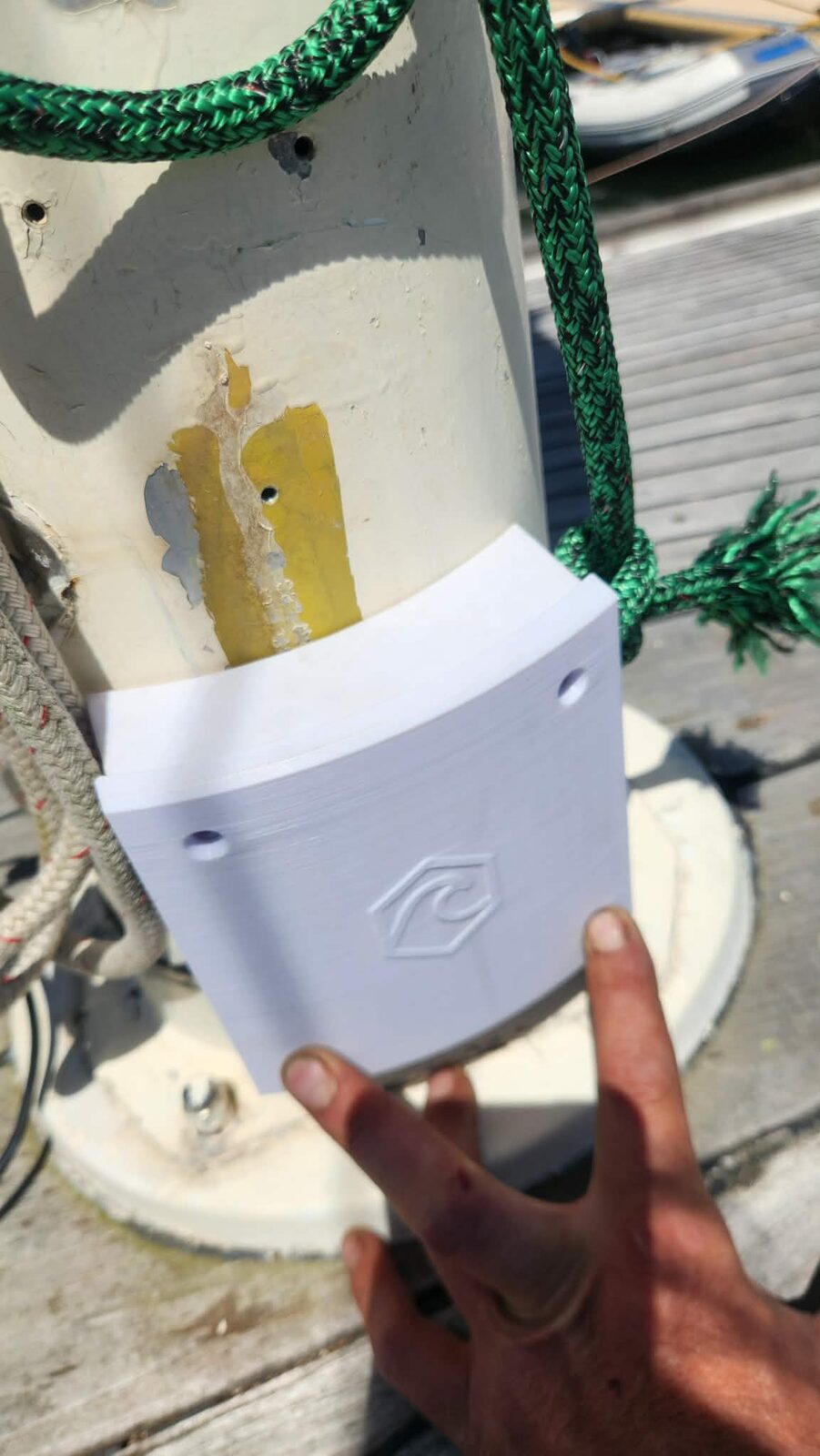
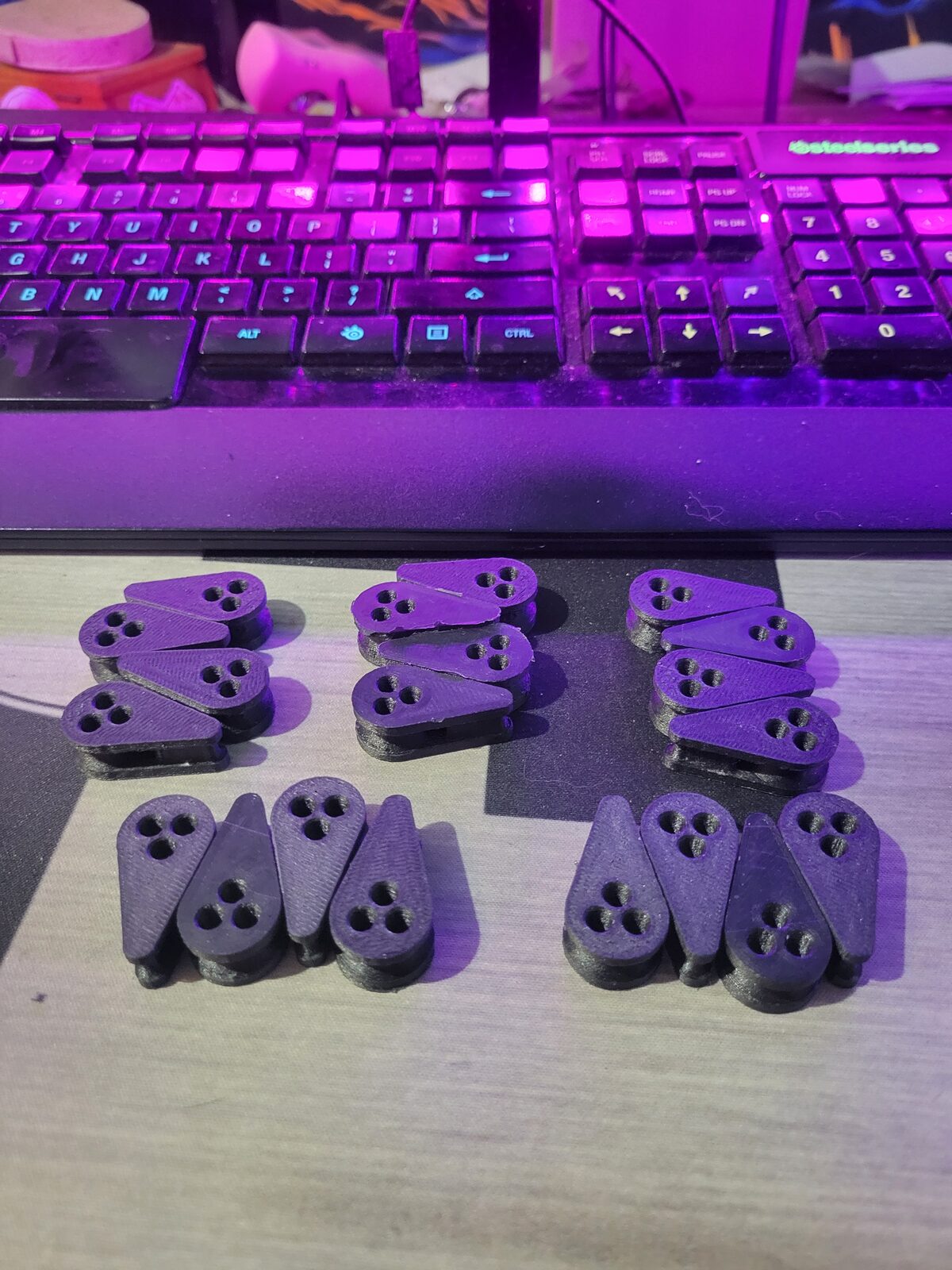
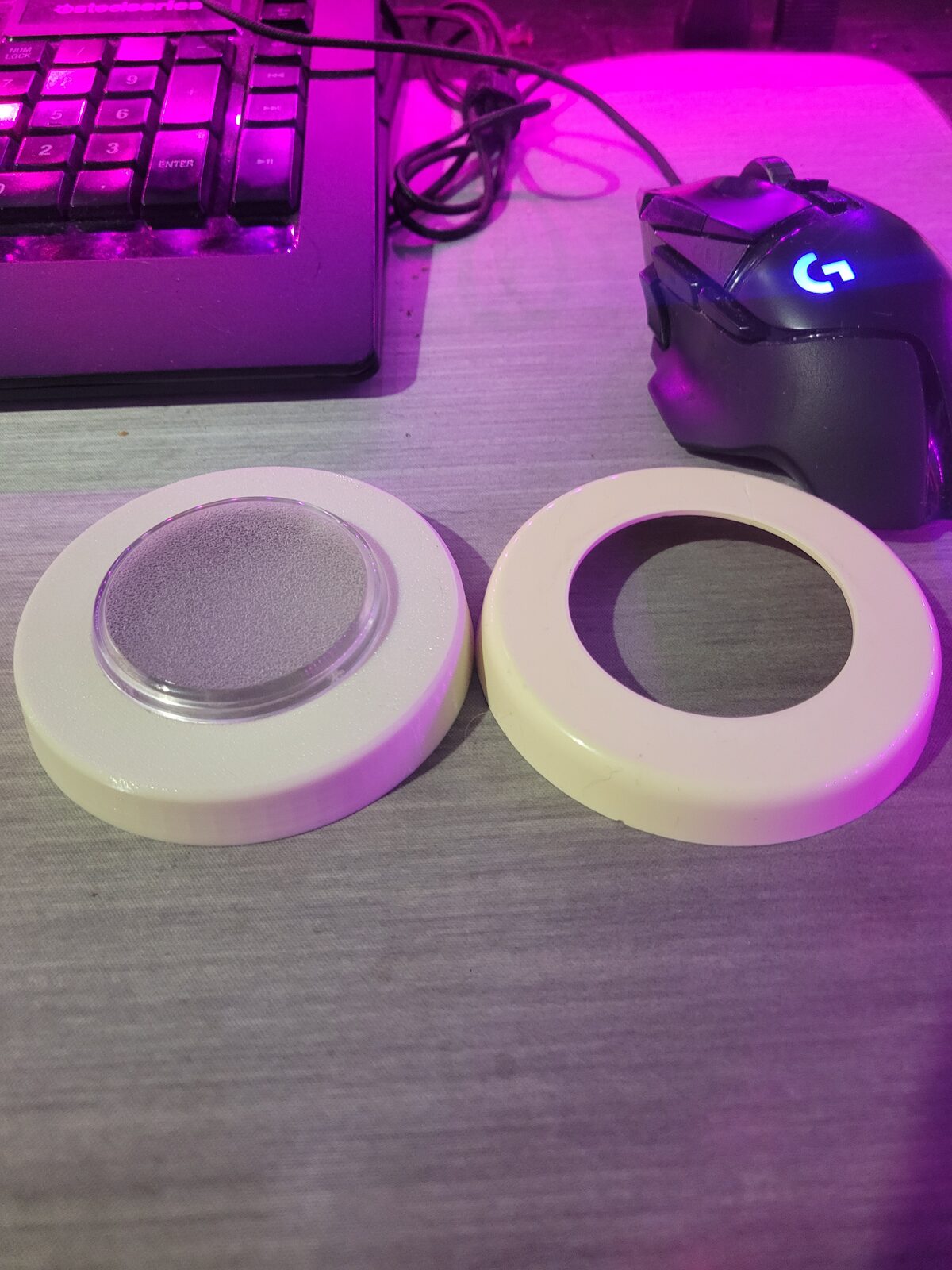
Every part above was printed for the boat first. If it survives a season on the Saint John River, it earns a place in the marine catalogue.
Mr Jumpa is a 1977 Farr 38 One Tonner on the Saint John River, New Brunswick. Sponsored by High End Welding, she is where every 3D-printed marine part earns its place before it reaches a customer. The boat is the reason 3D3D's marine work is different from a print shop with a saltwater page.
The One Ton Cup was the benchmark of serious offshore racing through the 1970s. A boat built to that rule wasn't designed for boat shows — it was designed to survive. Ours is 49 years old and still earns its keep.
What is a Farr 38 One Tonner?
The One Ton Cup defined serious offshore racing through the 1960s and 70s. It demanded real capability: fractional rigs, fin keels, light displacement, and hull forms that handled Beaufort 7 to 9 rather than folding under them. Bruce Farr's New Zealand designs dominated the class. A 1977 Farr 38 is not a classic in the nostalgic sense — it is a documented offshore machine that was state-of-the-art when it left the yard, and still is in everything that matters.
The IOR rule is long gone. The boats it produced are not. They are light, fast, and seaworthy in ways that production cruisers built for boat-show buyers are not. They are also completely unsupported by any chandlery: the hardware is discontinued, original suppliers are closed, and the parts that do exist are expensive and often wrong. That gap is exactly what Mr Jumpa is here to close.
A Farr 38 is the most honest test environment we could have chosen. She doesn't forgive marginal material choices. She doesn't tolerate parts that are almost right. What survives on her survives on anything.
Who is High End Welding?
High End Welding (HEWS) is a New Brunswick fabrication and welding company. They backed Mr Jumpa into the water and they back the marine R&D program that runs alongside it. The arrangement is not a logo on a sail. HEWS works in metal; 3D3D works in polymer and design. The parts that come out of that combination go on a real boat under real conditions.
Freshly surveyed and on the Saint John River, backed by High End Welding. Printed parts prove themselves on her before they're offered to you. The season's goal: PEI's Around the Island race.
— From the 3D3D marine page
The partnership matters because it grounds the marine work in a trade relationship, not a marketing angle. When a part fails on the boat, both sides know about it. When it holds, it goes into the catalogue. Nothing ships to a customer that has not survived the same conditions the boat operates in. That is the arrangement.
Where does the offshore judgment come from?
Mr Jumpa is the boat we are building the program around. The offshore experience that informs how we build it came from years before she arrived. The founder's sailing career included deliveries, training programs, and the 2025 Rolex Fastnet Race as crew aboard Osprey — an 80-foot Farr maxi, Cowes to Fastnet Rock to Cherbourg on the centenary edition. That race is documented in the stories.
That experience goes directly into how parts are specified on Mr Jumpa. What breaks offshore, how it breaks, and what a repair has to survive under load in 35 knots — that judgment is in the material selection before anything goes on the printer. There is no amount of CAD modelling that substitutes for having had the boom come down.
Mr Jumpa's goal for 2026 is PEI's Around the Island race: a real offshore circuit that will push the parts the way they need to be pushed. The boat is 49 years old. She does not need to be proven. The parts do.
How does the boat prove the parts?
Every marine part we offer has been on this boat first. ASA under UV. PETG-CF under load. TPU in the joints that compress and the fittings that need flex. The Saint John River puts real hours on hardware — sun, temperature swing, and the vibration and load of an offshore racing hull that was never built to be gentle.
When a part fails, we find out before a customer does. When it holds through the season, it goes into the catalogue with the confidence that comes from something that actually happened. The boat is the test bench we would have had to build anyway. It happens to also be a 1977 Farr 38 that goes racing.
UV-stable exterior fittings. Holds colour and structure through a full season of sun and temperature cycling on the river.
Load-bearing brackets and structural mounts. 40% stiffer than plain PETG at close to the same weight.
Seals, bumpers, and flexible joints. Compresses without cracking; grips without slip; survives thousands of compression cycles.
General-use covers, guards, and fairings. Cost-effective, dimensionally accurate, and proven through hours of fresh water and UV exposure.
Questions about Mr Jumpa.
What is Mr Jumpa?
What is a One Tonner?
Who is High End Welding?
Why do you test parts on the boat?
Can you make parts for a vintage offshore racer like a Farr 38?
What races is Mr Jumpa competing in?
The broader record
More than a boat.
Mr Jumpa is where the marine work is grounded. The decisions behind the shop, the parts, and the people who trust us with their boats are told in full — storm, Fastnet, propeller, all of it.
Read the storiesMarine vertical
Parts for boats.
Autopilot gears, hatch hinges, vent cowls, cleats, and the fittings your chandlery stopped carrying. Everything tested on Mr Jumpa first. Instant quote, 24-hour turnaround.
Marine parts