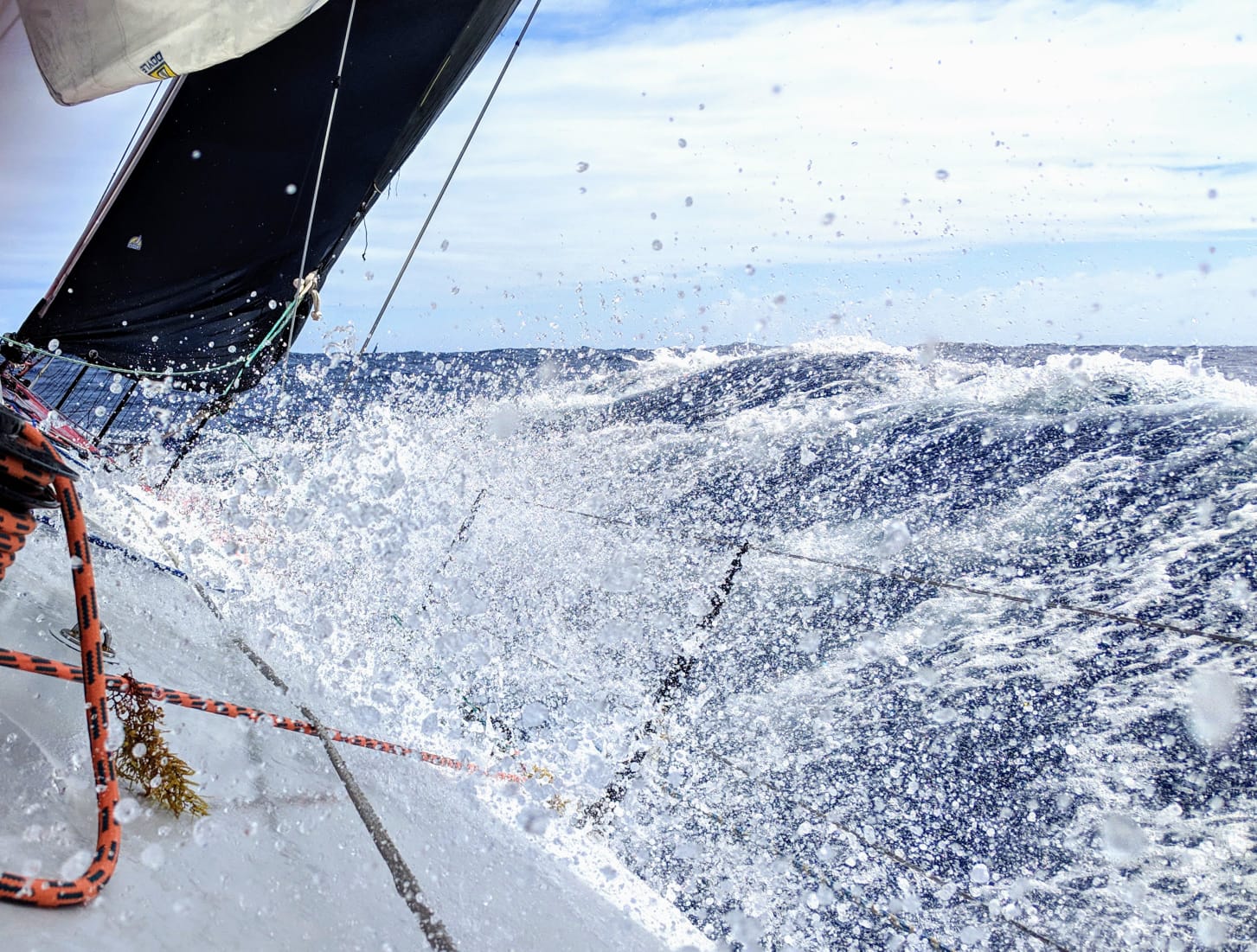
The Warning
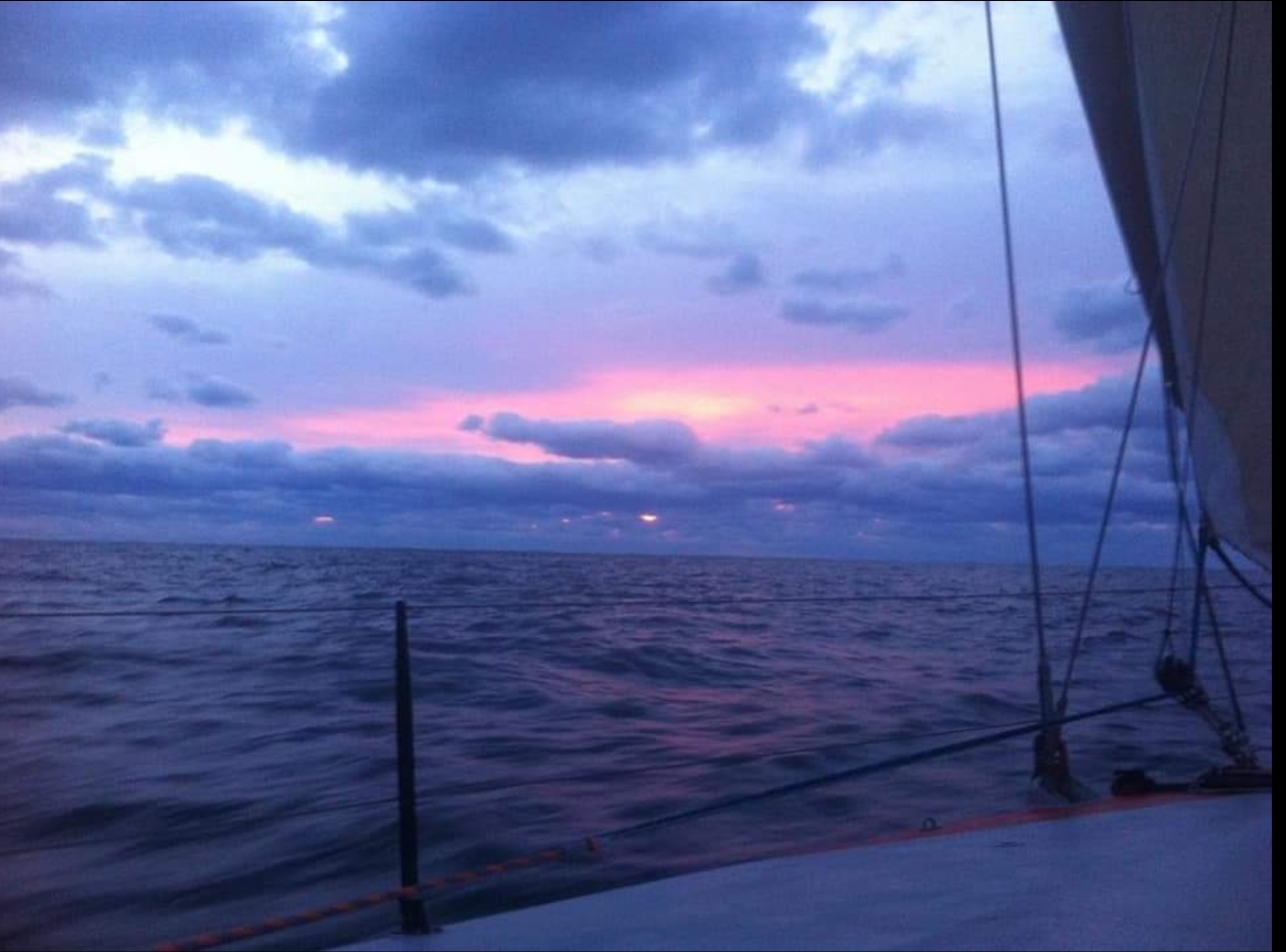
Red sky in the morning. Every sailor knows what that means.
The day before the system hit, the sky told us exactly what was coming. The forecast called for a strong 35 to 45 knot depression. That was the pattern. What developed was something else entirely.
The Departure
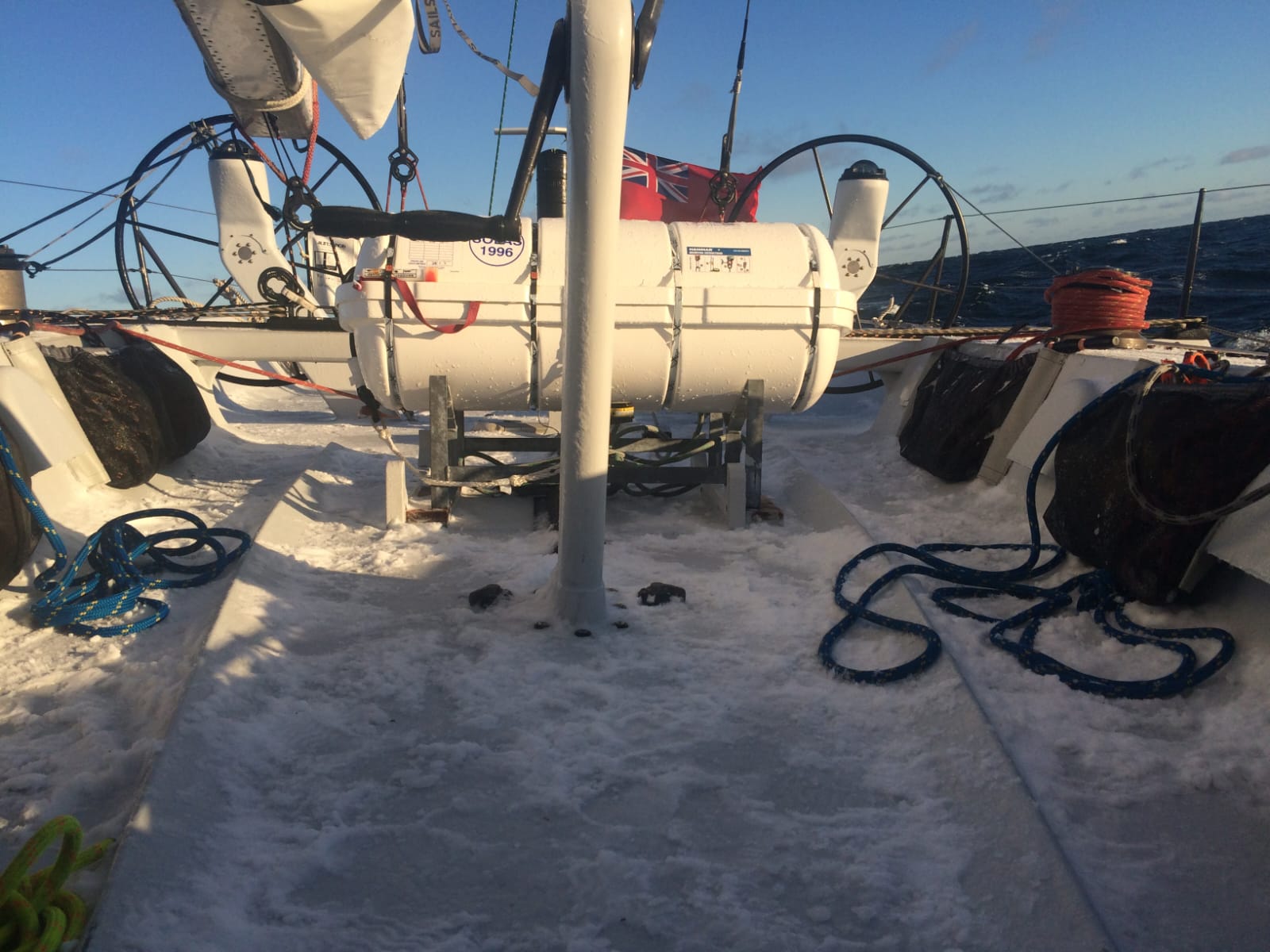
We left Lunenburg in February. There was snow on the decks that morning. The temperature had dropped low enough that the mooring lines had frozen solid onto the bitts. There was no easing them off. We had to cut them to get clear. It was that kind of departure.
Challenger was a Whitbred 60, sister ship to Yamaha, the 1993 round-the-world winner. Sixty feet overall, a hundred-foot rig, a deep keel with several tonnes of ballast, and a Kevlar hull designed for around-the-world racing. If there was a boat that could take sustained punishment, it was this one.
I was double-handed with Chris Stanmore-Major. This was my first time offshore. Chris had already completed two circumnavigations, one with a crew of 20, the other solo south of the three stormy capes. He had brought Challenger round from California to Nova Scotia the previous fall, on his own. There was no question he knew the boat and knew what he was doing. Still, heading out into the North Atlantic in February was not something either of us took lightly.
Day One: The System Arrives
What developed ahead of us was a fast-deepening system. A bomb cyclone. Barometric pressure dropped 24.3 millibars in 24 hours. The day before it reached us, the same storm had forced the Anthem of the Seas to turn back to New Jersey. That is a 168,000-ton Royal Caribbean cruise ship. 4,500 passengers. Passengers were ordered to their cabins while furniture toppled and glass shattered.
The Bahamas Maritime Authority investigation later revealed that the Anthem's anemometer maxed out at 146 knots. That was the instrument ceiling. The captain estimated actual winds at 150 to 160 knots. Category 5 hurricane equivalent. The instrument was pegged. Both azipod propulsion units suffered catastrophic clutch failure from wave slamming.
We were further out, right on the Gulf Stream, at 38°48'N 63°46'W. Nothing between us and the weather. The storm had another day to develop before it reached us.
NOAA buoy 41001, 350 nautical miles southwest of our position, recorded peak gusts of 65 knots and pressure dropping to 981 millibars. At our position, closer to the center, conditions were significantly worse. The instruments read 75 knots sustained before the masthead gear tore away. The gusts were 95 knots or more. After the instruments went, the only way to know was the sound of the wind in the rigging and the impact of the waves on the hull.
Day One: The Night
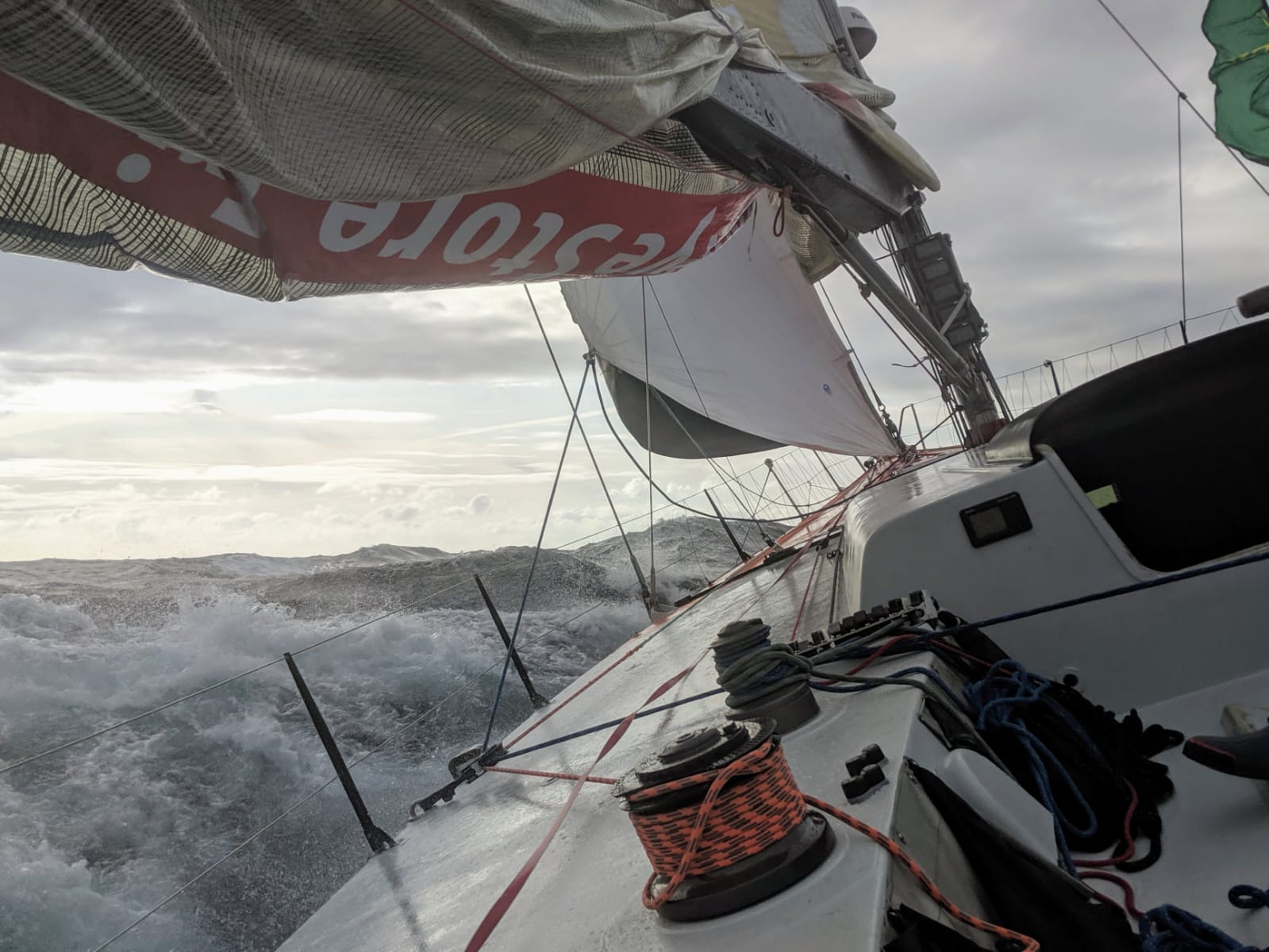
Chris was trying to heave-to to let the system pass. Then the mainsail jammed in the rig. He went aloft to clear it.
That left me alone on deck. On the helm. In the dark. Running before the storm because the stuck sail would not let us stop. Nobody should ever have to run in those conditions. But there was no choice.
There was no real visibility. Just the feel of the boat through the wheel. The lift as a wave approached. The hesitation before the drop. The acceleration as the stern started to run. You steer for balance more than direction. Small, constant corrections to keep the boat under control as the sea shifts under you.
I wanted to drop to my knees after the first five minutes. I stayed on my feet because there was no one else. An hour and a half of this. Alone. Clipped on. Reading the ocean through the wheel in total darkness.
Day Two: The Hatch
The companionway hatch was washed away. From then on, every boarding wave sent water straight into the boat. There was no spare. No straightforward fix.
We took the vinyl bathroom door, the heads door, one that had been made by a fellow in Lunenburg. Drilled it directly over the opening and sealed the screw holes with 3M 5200 marine adhesive. A crude solution. It held for the rest of the passage without issue.
That was the nature of reality from that point on. Using whatever was available. Making decisions quickly. Accepting that the solution does not have to be beautiful, only effective. That approach has carried forward into everything since.
Day Two: Everything Fails at Once
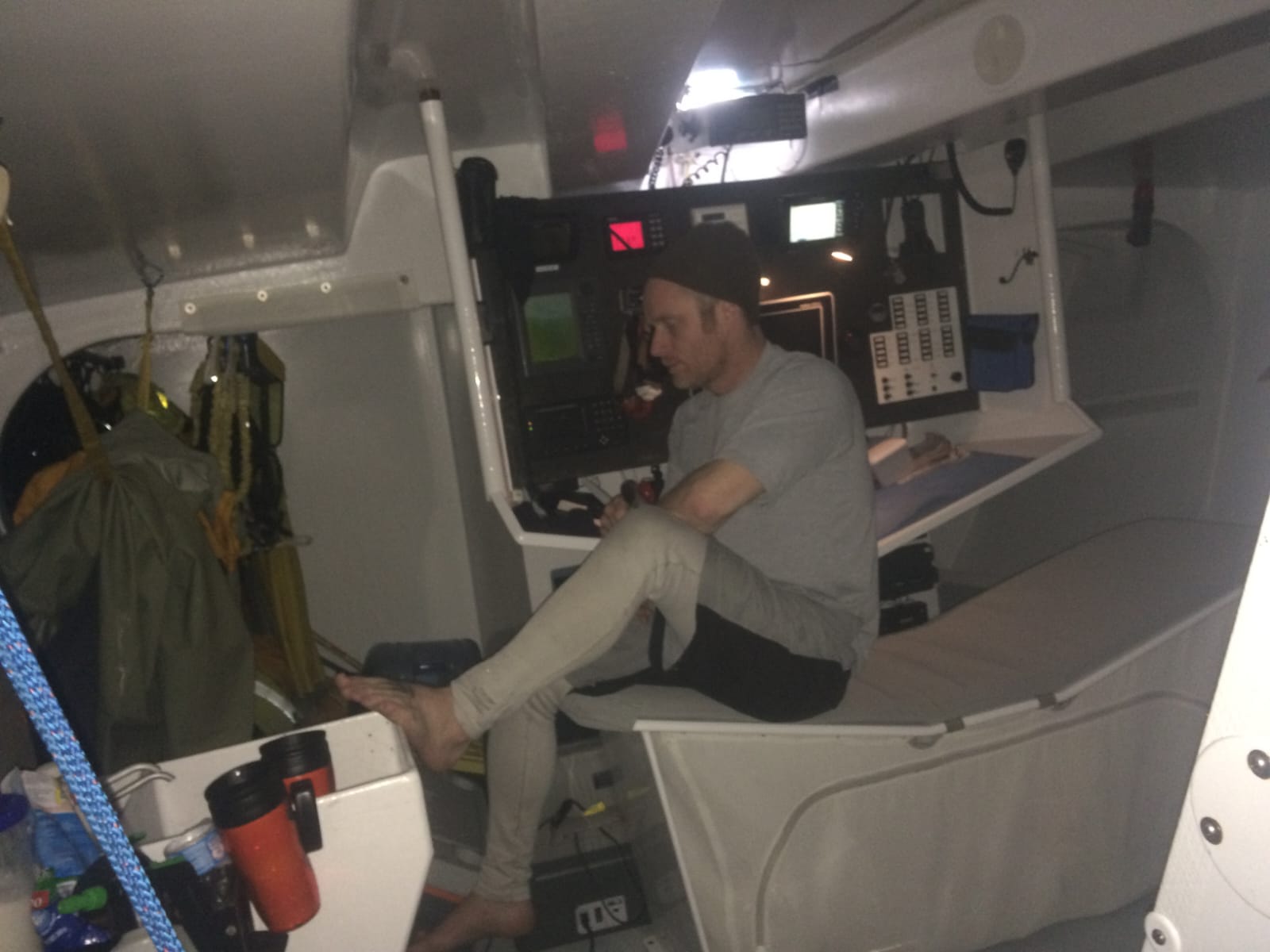
The diesel overspilled below. The steering quadrant lost its ropes. Other systems dislodged from the violence of the motion. The diesel made its way through the bilge and into stores. Alongside everything else, we were cleaning diesel out of every surface we could reach while being thrown around by 30-foot waves every 15 minutes.
There was no separation between sailing, seamanship, and survival. It was all happening together, continuously.
Day Two: The EPIRB
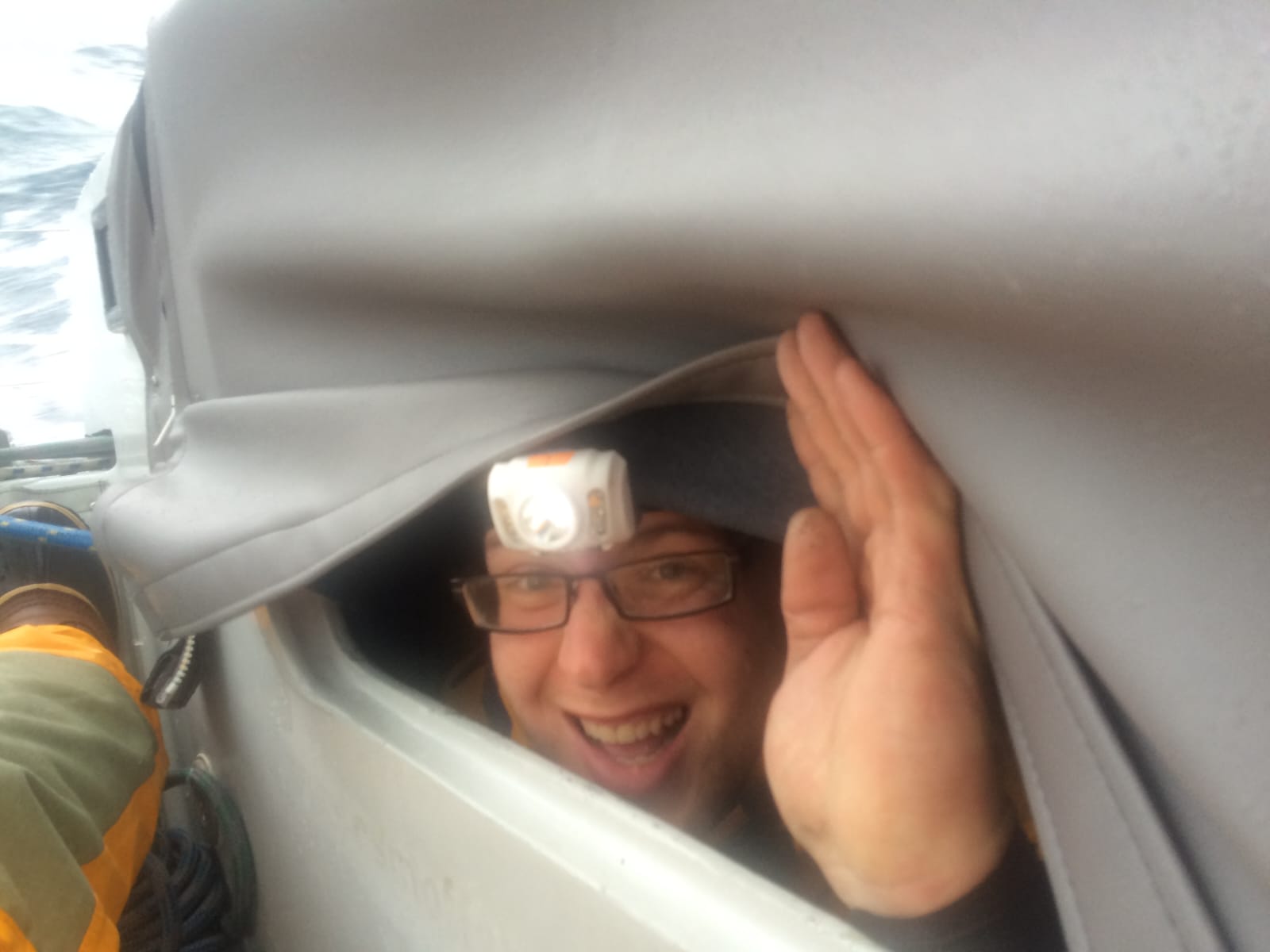
I asked once about pulling the emergency beacon. We talked about the reality of what that meant. A military vessel with 300 souls would have to come find two people in the middle of a bomb cyclone. We had a perfectly safe vessel if we stayed diligent and prepared. We were still in control of the boat. The problems were serious but they were being managed.
We restored our energy and maintained preparedness for whatever was coming next. One conversation. That was it.
“Every second I was gone, I didn't figure I was going to make it through it. I accepted my fate and just accepted for when the worst got worse, what I was gonna do, and just hope that it was going to work. And it did.”
Day Three: The Eye
The system passed over us. There was a period, brief but very distinct, where the wind dropped away. The sea was still moving heavily from what had come before, but without the driving force behind it. Almost calm by comparison. The sound of the waves slapping the hull and jostling us around is as clear and distinct now as every keel-shaking impact was then.
Then the wind returned from the opposite direction. The second half of the storm arrived. We slept periodically throughout. You take rest when you can, because you do not know when the next chance comes.
Day Three: The Surf
When it finally began to ease, the boat came back to life. With pressure in the sails and freedom to move again, Challenger accelerated cleanly and dropped back onto her southerly route. I took the helm and caught a wave. Surfed her at 26 knots. On a 60-foot sailboat. After three and a half days of fighting to survive.
That effortless shift between modes. The storm does not break you. It shows you what you are capable of.
“Can't isn't a word. It's just a mindset. Once you get past that, you can accomplish nearly anything.”
The Nine Days
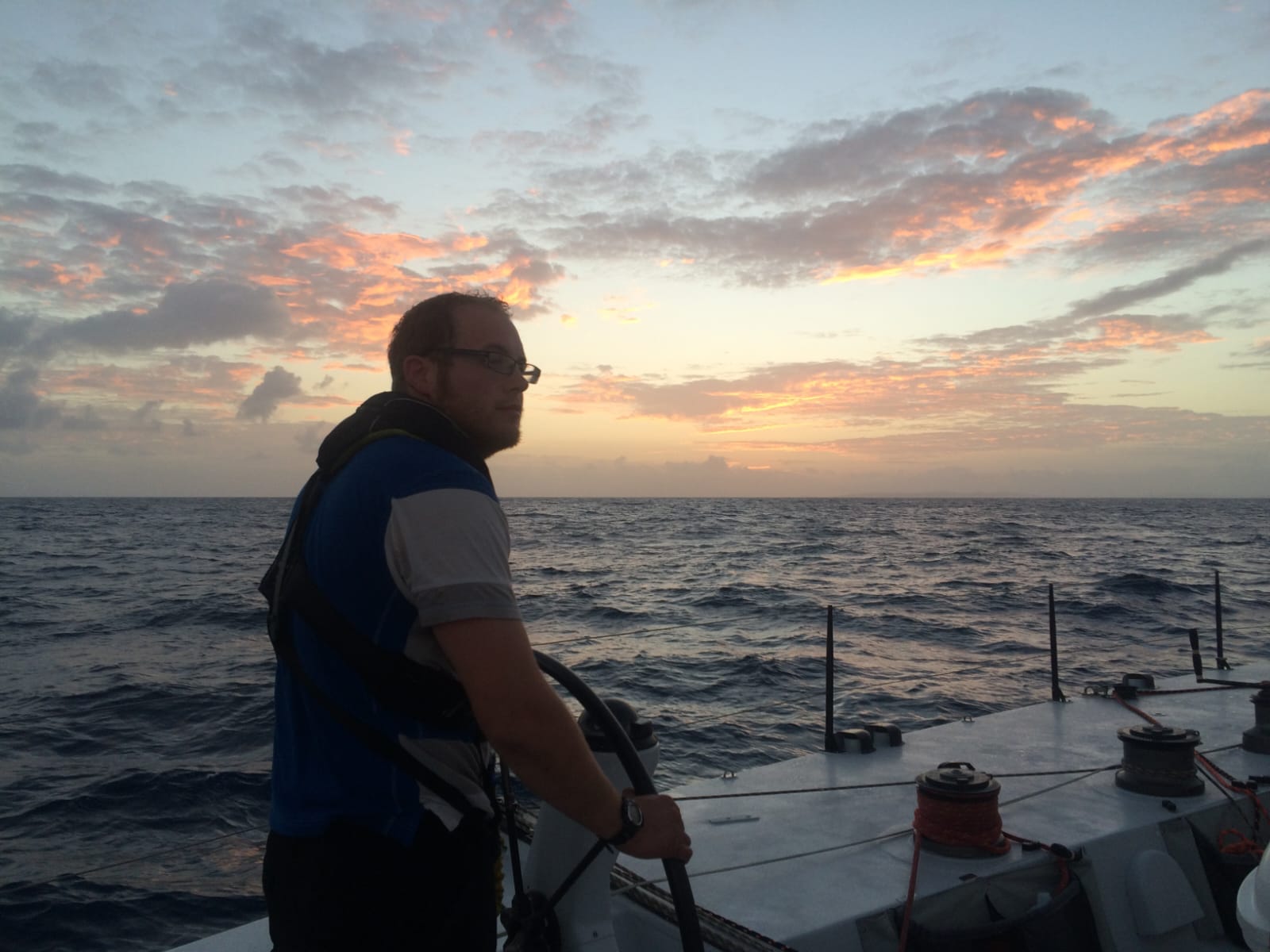
After the storm, nine more days of sailing south to Antigua. The generator was worked on east of Bermuda. We almost did not have enough battery to start it. The fuel filter was dirty. I rebuilt the impeller, cleaned the fuel pump, and got it running again. A separate incident from the storm, but the same approach. Work with what you have.
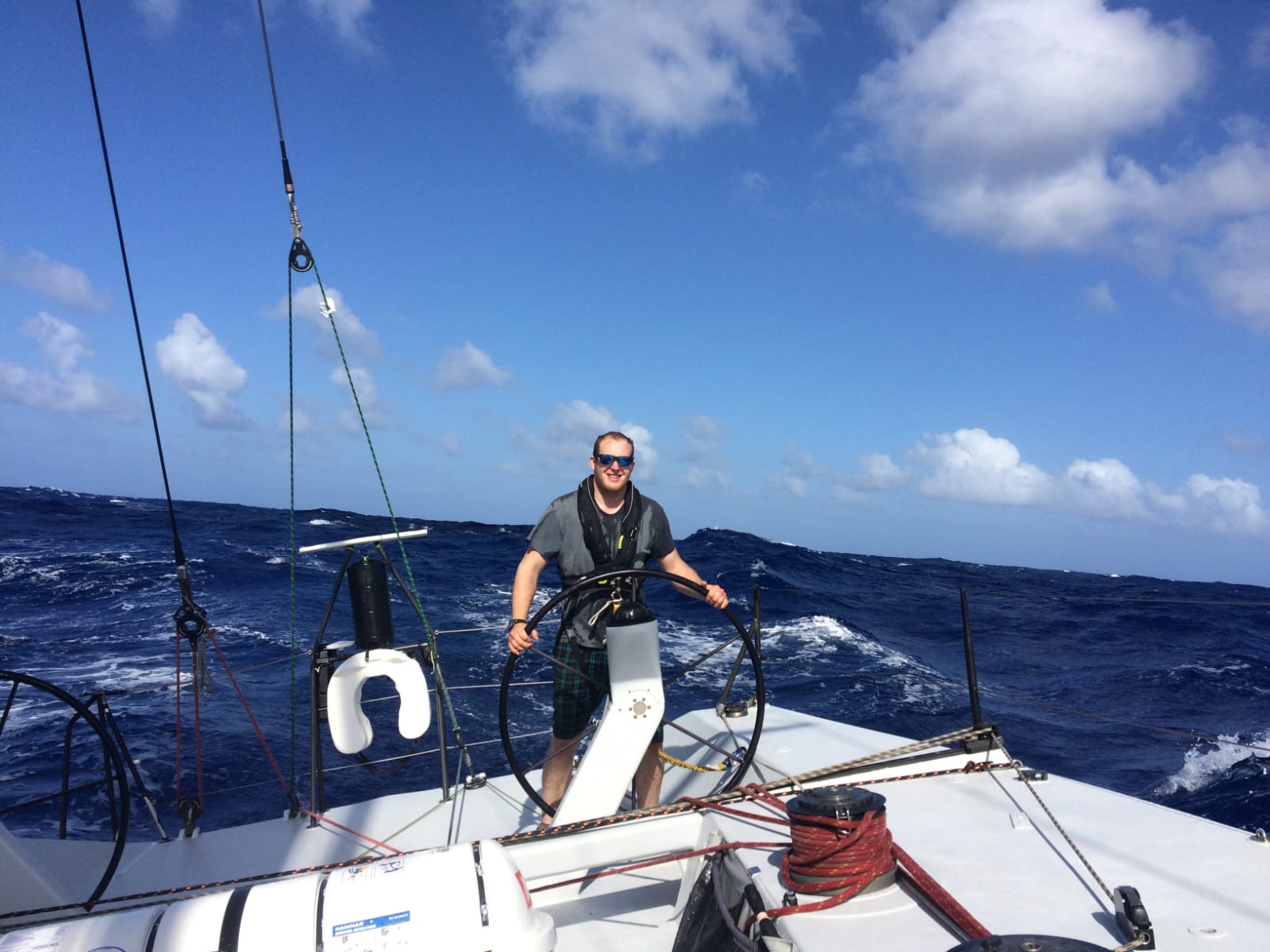
Thirteen days total. Three and a half dominated by the storm. Nine more getting to where we needed to be.
Landfall
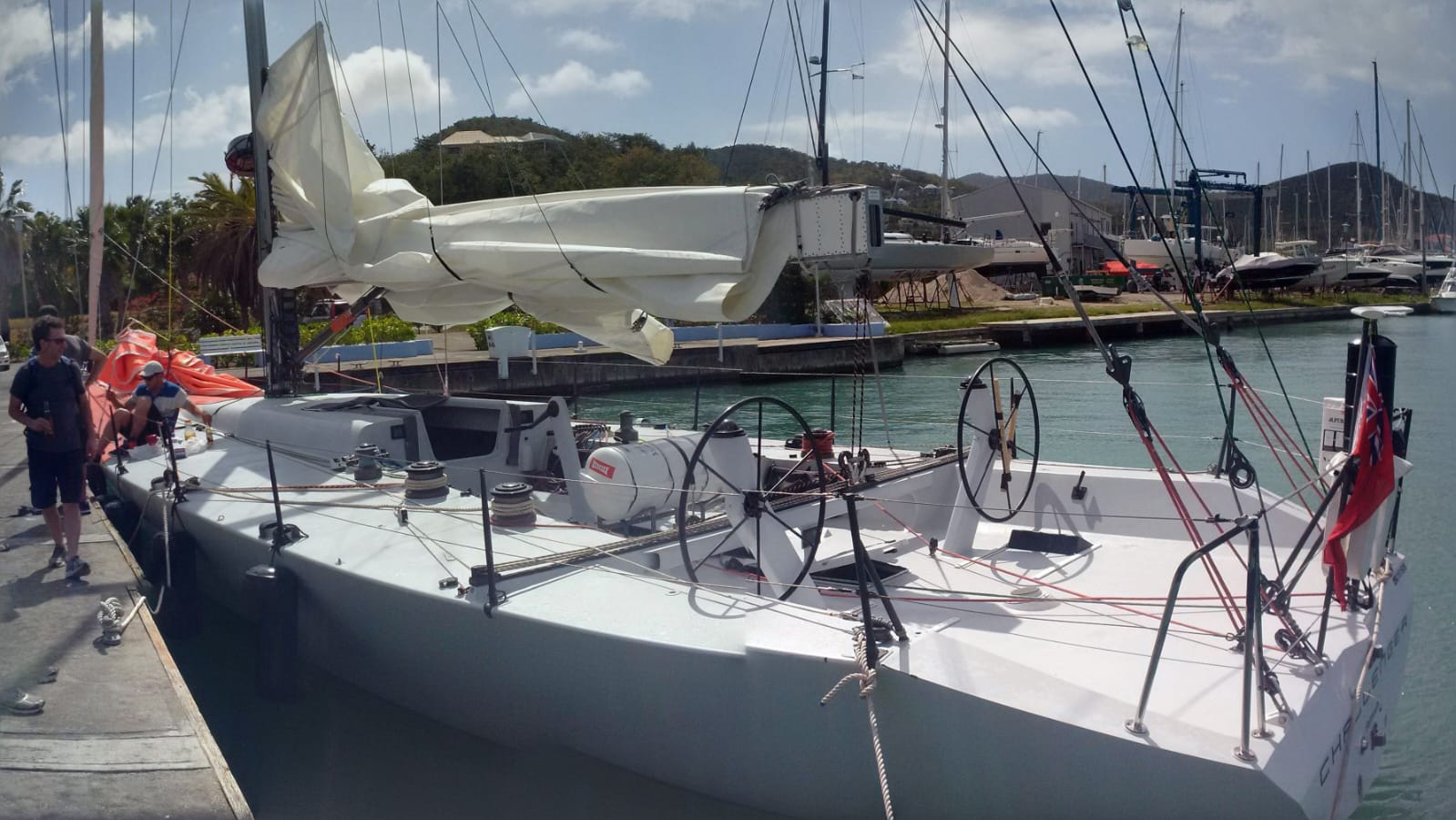
Landfall in Antigua was not a celebrated event. It was a transition. Within half an hour of tying up, I had half a Corona in one hand and a deli meat sandwich in the other. I did not clear customs. Chris handled that. I walked straight to the helm, pulled the broken steering wheel off, and carried it to the nearest shop. Then I dropped off the laundry. Then I kept working. There were two or three days before the race and there was no time for anything else.
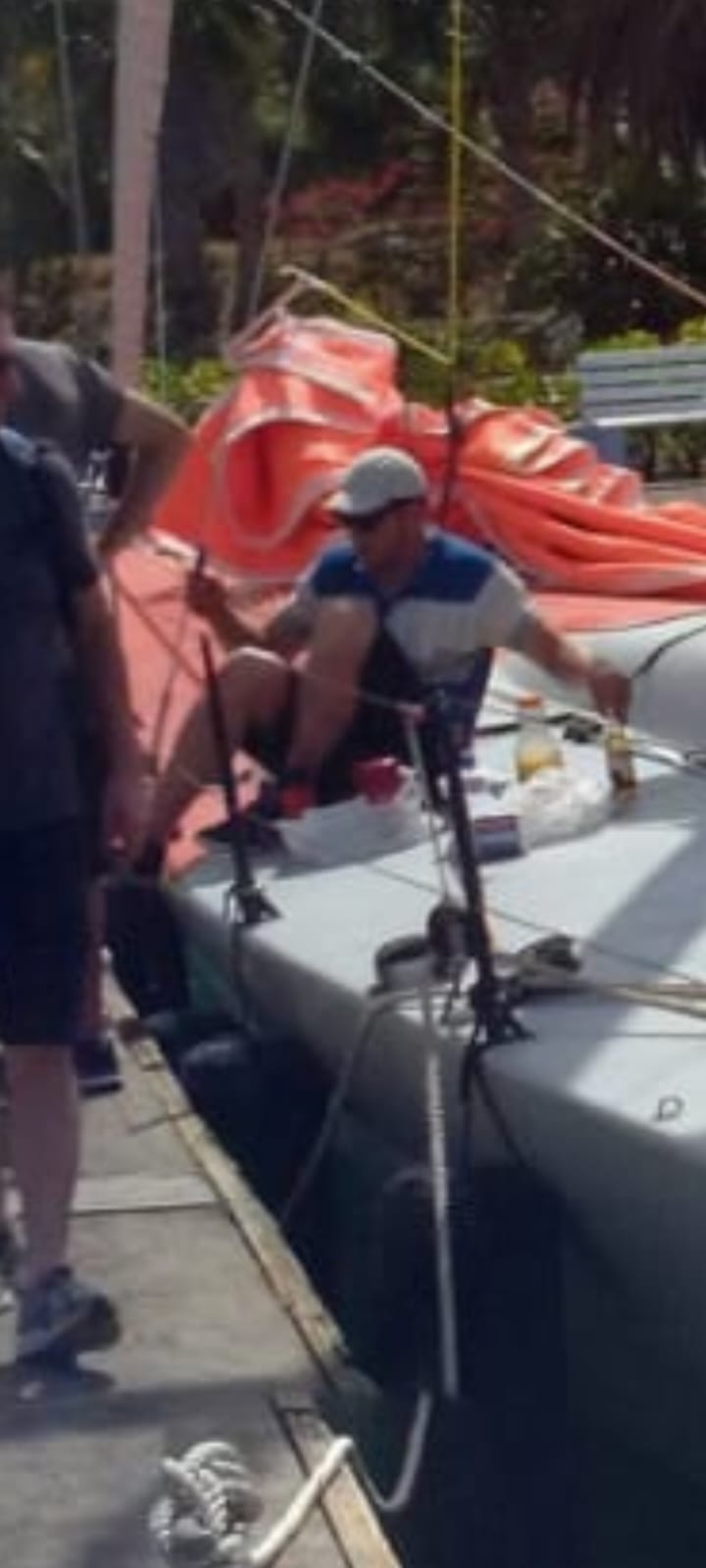
I discovered beef patties in Antigua. And I discovered that I loved travel. This trip kicked off both.
What This Has to Do with Vessel Management
The hatch repair was 3D3D before 3D3D existed. No supply chain. No catalogue. Just the problem, the materials at hand, and the ability to figure it out. That is the same approach every project gets today. When a part does not exist, it gets made. When a supplier does not have it, another one does. When the situation is bad, the work still gets done.
The person who manages your vessel survived a bomb cyclone in a 60-foot sailboat. Rebuilt a generator impeller east of Bermuda with nearly dead batteries. Surfed at 26 knots after three days of survival. Your seasonal refit is not going to be the thing that breaks him.
Your vessel needs someone who shows up.
Vessel management, custom parts, and field support — globally. Reply within 24 hours.
Make an Enquiry