The Damage
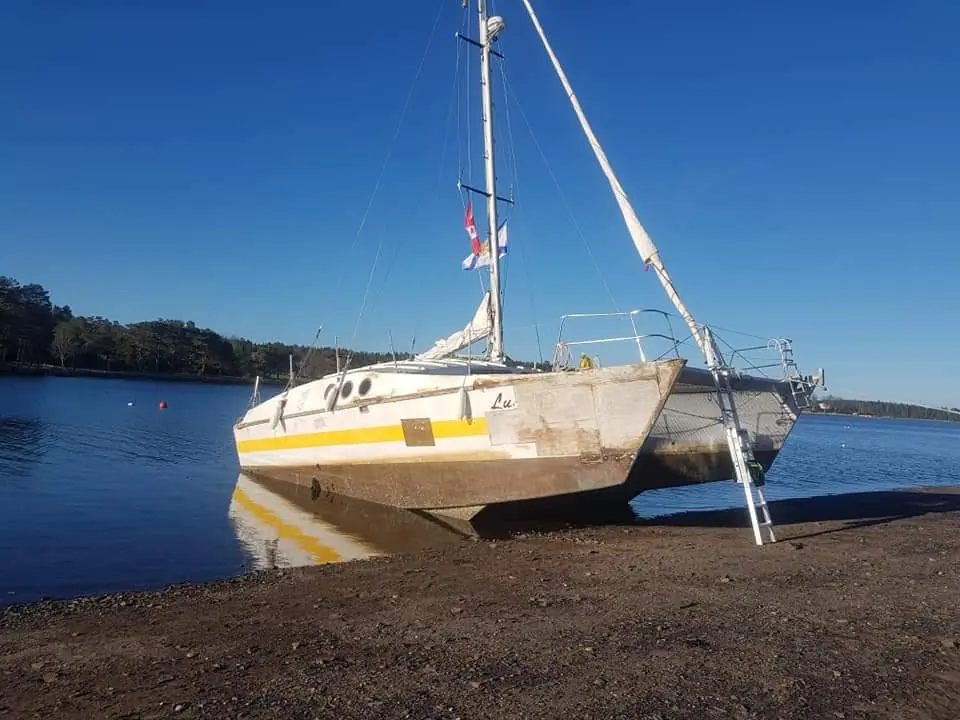
Pinners Pride is a catamaran that had been smashed against the dock in Halifax/Dartmouth Harbour. The hull showed the evidence — scuffing, gel coat damage, and structural marks from the impact. Below the waterline, months of marine growth had accumulated. Mussels, barnacles, and algae covering the hull surfaces. The vessel needed to be hauled out or careened to address both the damage and the growth.
The Approach
Not every job requires the most expensive solution. The owner needed this done affordably. Ken's philosophy: do the minimum work absolutely needed, do it right, and do not upsell. Careening — beaching the vessel at low tide to access the hull — is one of the oldest techniques in sailing. It works. And it costs a fraction of a commercial haul-out.
Environmental Responsibility
Every decision considered the environment. Waterborne antifoul was chosen over traditional copper-based paints. Tarps were laid under the vessel to catch every paint scraping and removed material. Nothing went into the water. Nothing went into the ground. The mussels and growth were scraped off by hand and collected.
This is how marine work should be done. The harbour is not a dump. The antifoul protects the hull. The tarps protect the harbour. Both matter.
The Work
Mussels scraped off entirely by hand. Hull surfaces cleaned and prepared. Dock damage assessed and repaired where structurally necessary. The antifoul applied properly — waterborne, consistent coverage, right thickness. No shortcuts on the work itself, just smart decisions about scope.
The Result
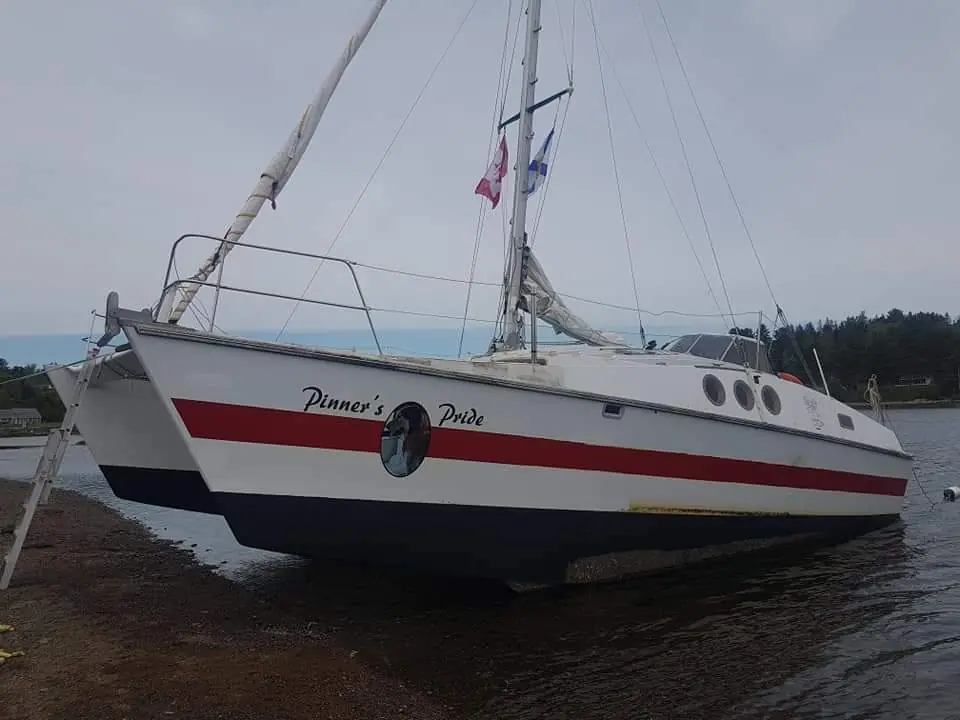
Clean hull. Fresh antifoul. Repaired damage. Ready to go back in the water.
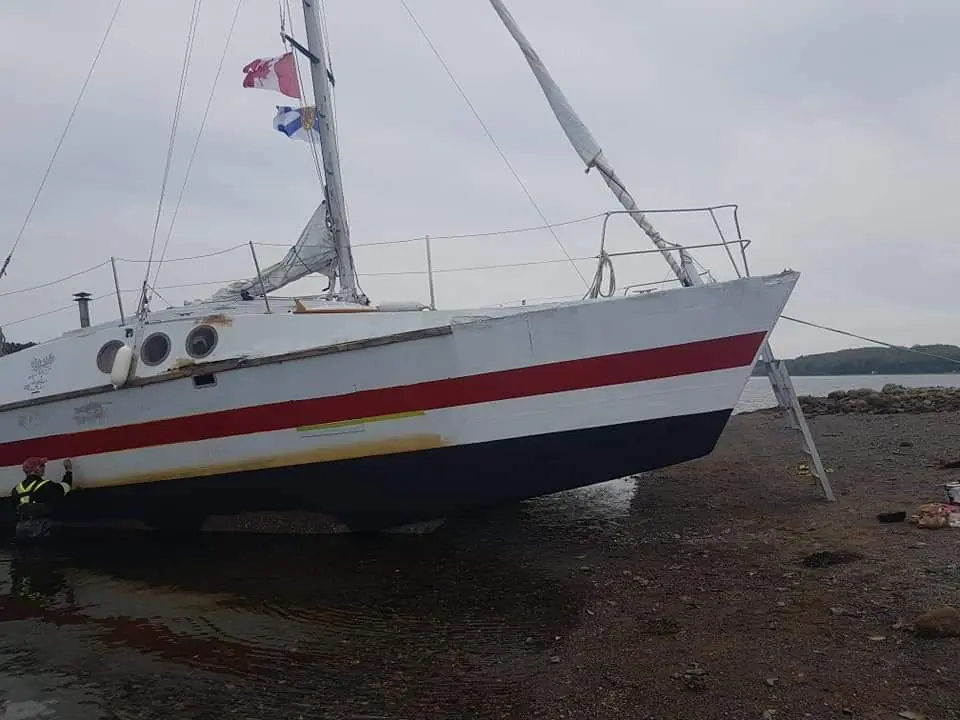
Before
After
Why Careening Still Works
Commercial haul-outs cost thousands. For vessels under 40 feet, careening on a beach at low tide is often the smarter choice. The technique is centuries old. It worked for the Royal Navy. It works for Pinners Pride. Not every problem needs the most expensive solution. Sometimes the smartest approach is the oldest one.
Frequently Asked Questions
What is careening?
Beaching a vessel at low tide to access the hull below the waterline. One of the oldest maintenance techniques in sailing. Works for smaller vessels where commercial haul-out is not practical or economical.
Is waterborne antifoul effective?
Yes. Modern waterborne formulations perform comparably to traditional copper-based paints for recreational vessels. They are less toxic to marine environments, easier to apply, and easier to clean up.
How much does careening cost?
Significantly less than a commercial haul-out. Exact cost depends on the vessel and scope of work. Contact for a quote.
Can you do this at my location?
Yes. Careening can be done at any suitable beach with appropriate tidal range. I assess the location and handle the logistics.
This is what Managed Care looks like
Hull work coordinated and documented. This is what managed care insurance documentation looks like in practice.
Learn about vessel management retainers →