The Newport-Bermuda Race has been running since 1906. The 120th edition starts June 19, 2026 from Fort Adams, Newport, Rhode Island. 150+ boats. 636 nautical miles of open Atlantic to St. George's, Bermuda.
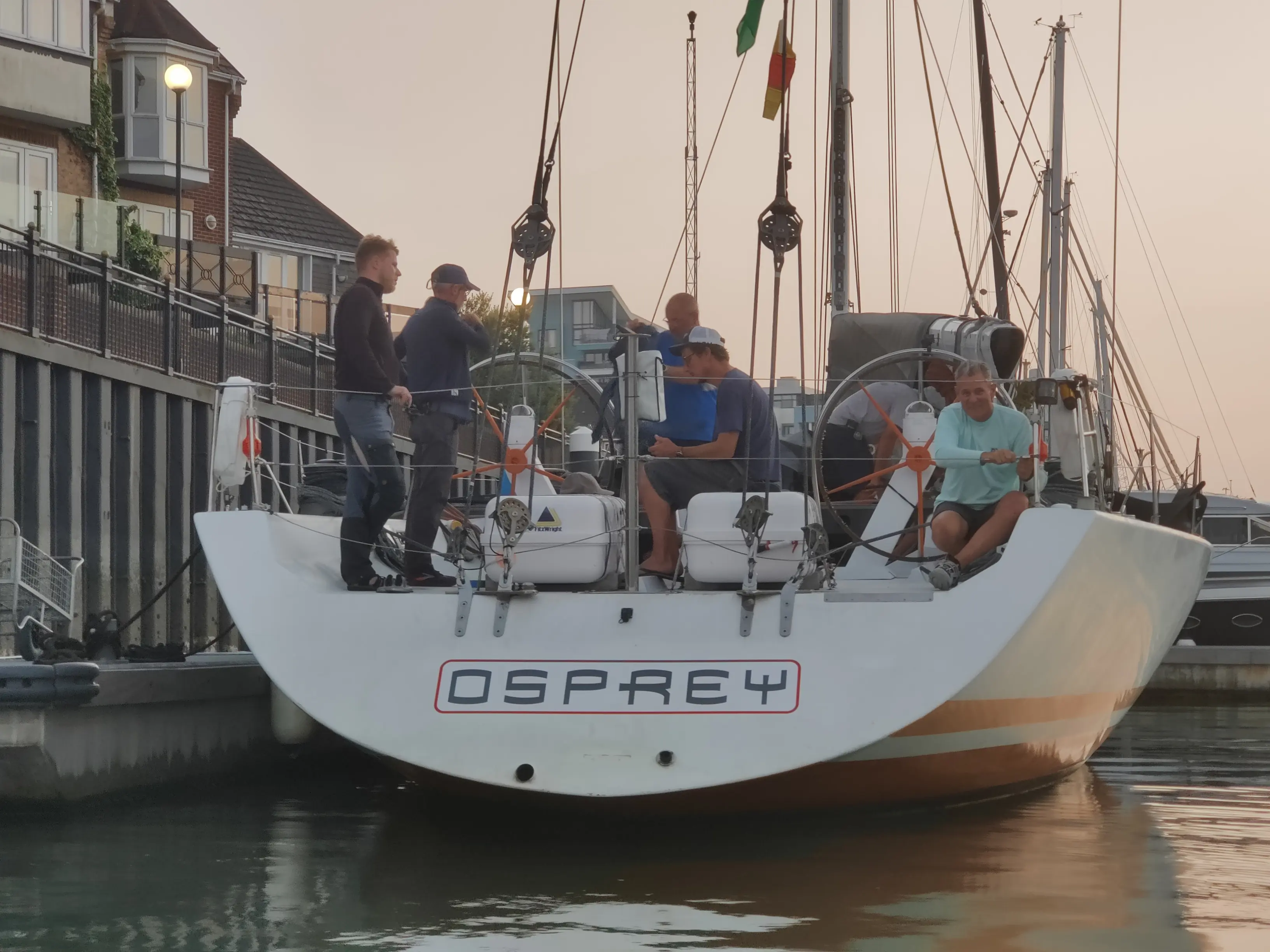
Aboard S/V Osprey, a 1996 Farr Grand Mistral 80 with a Kevlar hull and carbon spar, a Prusa Core One L 3D printer will make the crossing as a crew member. This is the proof of concept that changes how marine parts get made.
The Vessel
Osprey is a 24.5-meter competitive maxi. Kevlar hull. Carbon spar. Starlink connected. Skippered by Christopher Stanmore-Major, the 182nd person to circumnavigate the globe solo. Over 325,000 nautical miles. 34 Atlantic crossings as of April 2026. RYA instructor. Clipper 2009/10 skipper of Qingdao. Velux 5 Oceans 2010/11 solo competitor.
Ken and CSM have worked together for over ten years. Ken did the six-month Challenger refit, served as Director of Spartan Ocean Racing and Training, and fitted three vessels for offshore category zero racing. This partnership is built on a decade of trust under some of the worst conditions the ocean can produce.
The Printer
Prusa Core One L. Enclosed heated chamber. 300 x 300 x 330mm build volume. 290°C max nozzle temperature. Runs from shore power, generator, or onboard power systems. The same machine that deploys to any vessel location worldwide, carried as checked luggage on commercial flights.
Materials on board: ASA for UV and weather-exposed parts. PETG-CF for structural applications. PA-CF for premium high-load components. Full CAD design capability with parts designed and printed either underway or dockside.
What Happens Before the Race
The printer sets up aboard Osprey at Fort Adams. Final preparations. Equipment check. Materials loaded and secured for offshore conditions. Every aspect of the deployment is documented for future reference. How the printer is secured. How materials are stored. What power configuration works. What print settings account for a moving vessel.
What Happens at Sea
The printer rides through whatever the Atlantic delivers. Wind, waves, temperature changes, heel angles, vibration. Real-world data on how the machine performs in genuine offshore conditions. If anything breaks during the crossing, it gets printed on board. That is the entire point.
This is not a simulation. It is not a controlled test. It is 636 nautical miles of open ocean on a racing yacht. The data collected will be the most demanding test of 3D printing in marine conditions ever conducted by an independent operator.
What Happens in Bermuda
After arrival in St. George's, a live dockside demonstration. Custom parts printed on the spot for race teams and vessel owners present. Not a presentation. Not a slideshow. Parts designed, printed, and installed while people watch.
This is where the proof of concept becomes a proof of capability. If you are a vessel owner in Bermuda after the race and you need a part, it gets made right there.
The Partnership
Prusa Research confirmed their partnership with 3D3D. The Core One L was delivered April 8, 2026. An open race berth was offered to Josef Průša himself. This partnership was built on demonstrated capability and the proof of concept of printing marine parts at sea. Not sponsorship money. Prusa saw what 3D3D is building and decided to be part of it.
Why This Matters
Machine shops have three-week backlogs. OEM parts are discontinued. Yards charge markups on every invoice. The alternative is a printer that goes where the vessel goes and produces custom parts on demand. If it works at sea for 636 nautical miles, it works at your marina.
Need parts printed on demand for your vessel?
Custom marine parts. Field deployment. On your schedule. Reply within 24 hours.
Make an Enquiry