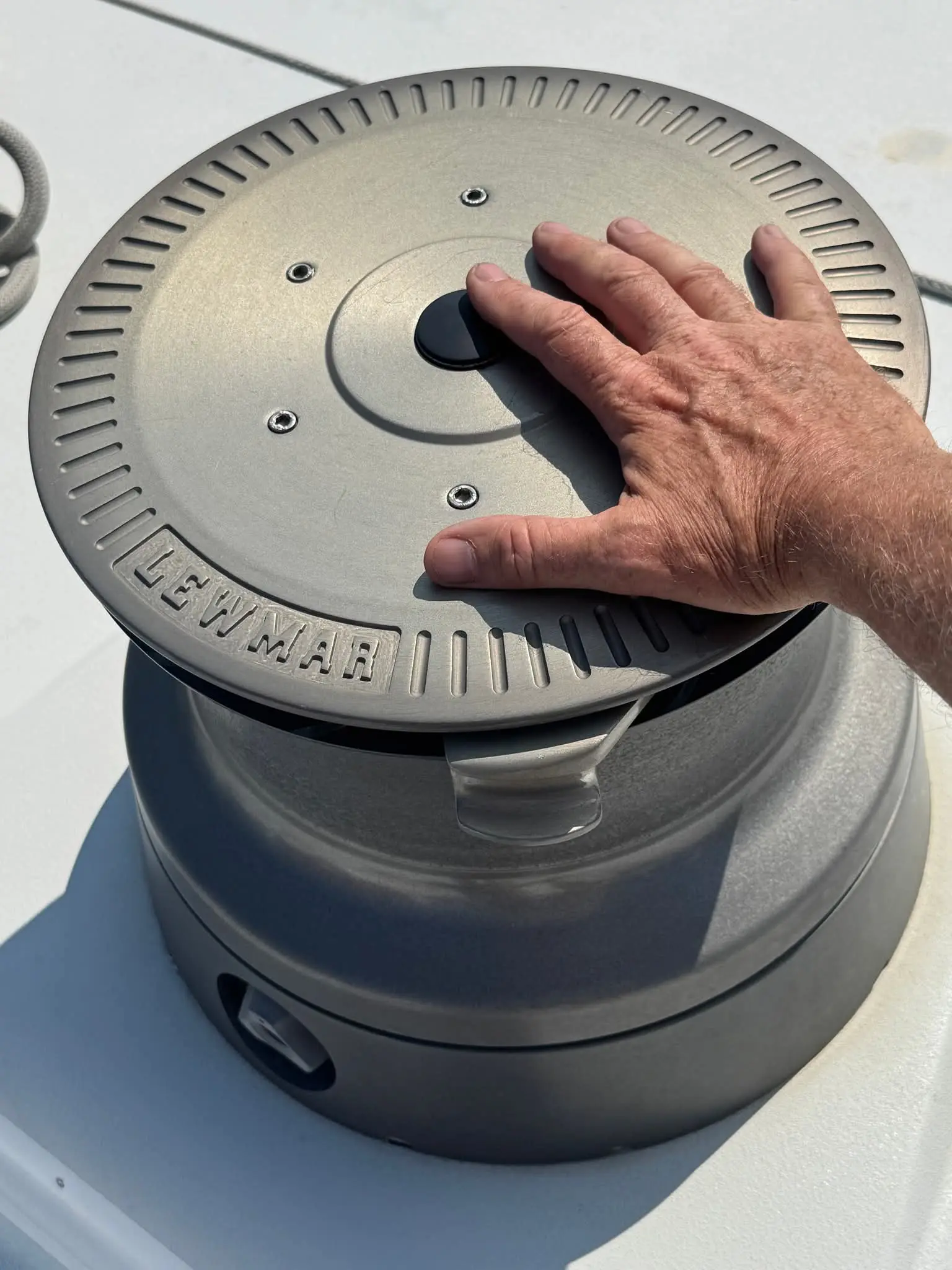
Not every 3D printing material belongs on a vessel. PLA melts in a hot cockpit. Regular PETG clouds under UV. The wrong material in the wrong location fails in weeks. This guide covers what works, where it goes, and why.
3D3D runs a fleet of six printers with a maximum nozzle temperature of 290°C. That covers 47 printable materials. Here are the five that matter most for marine applications.
ASA: The Exterior Standard
ASA (Acrylonitrile Styrene Acrylate) is the material for anything that lives outside. It was engineered for UV resistance. The same material class is used in automotive exterior trim, outdoor signage, and garden furniture that sits in direct sunlight for years.
On a vessel, ASA goes anywhere that sees sun and weather. Deck fittings, cockpit hardware, instrument housings, ventilation covers, fairleads, cleat bases, hatch handles. It does not yellow, warp, or degrade under UV exposure. It handles salt spray without breaking down.
Print temperature: 240-260°C nozzle, 100-110°C bed. Requires an enclosed printer to prevent warping. The Cherbourg mainsail track gate was printed in ASA. That part is still in service.
Where ASA fails
ASA is not a structural material. It should not bear high mechanical loads. It is not chemical-resistant against fuels or solvents. If the part needs to take serious force or contact diesel, choose something else.
PA-CF: The Structural Premium
PA-CF (carbon fiber reinforced nylon) is the premium option. It is strong, stiff, lightweight, and has excellent fatigue resistance. This is the material for parts that carry real loads. Winch components, block mounts, structural brackets, load bearing hardware.
Carbon fiber reinforcement increases stiffness by roughly 50% compared to base nylon. The trade-off is reduced flexibility. PA-CF parts are rigid. They hold dimensional accuracy under load better than any other printable material available.
Print temperature: 260-290°C nozzle. Requires an enclosed printer and a hardened nozzle because carbon fiber is abrasive. It eats brass nozzles in hours. 3D3D runs hardened steel nozzles on both enclosed machines for this reason.
The real-world test
PA-CF parts have been running on working vessels for extended periods. The material does not creep under sustained load like PETG does. It holds its shape. It does not absorb significant moisture once properly dried and printed. For high-value applications where failure is not an option, this is the material.
PETG-CF: The Chemical Shield
PETG-CF (carbon fiber reinforced PETG) sits between ASA and PA-CF in capability. It is stronger and stiffer than plain PETG with added chemical resistance. It handles fuels, cleaning agents, and most marine chemicals without degradation.
This is the material for engine bay components, fuel system fittings, bilge pump housings, and anything that contacts chemicals. It also prints easier than PA-CF. No enclosure required, though enclosure improves results. No moisture sensitivity issues during storage.
Print temperature: 230-260°C nozzle. Hardened nozzle required for the carbon fiber content. Good layer adhesion makes it reliable for functional parts that need to hold together under vibration.
Polycarbonate: The Impact Shield
PC (polycarbonate) is what you use when a part needs to survive being hit. High impact resistance, good temperature resistance (up to 130°C continuous), and optical clarity in clear variants. Think protective covers, instrument guards, sight glasses, and hardware that takes direct physical abuse.
Polycarbonate is used in bullet-resistant glass, motorcycle visors, and aircraft canopies. On a vessel, it goes where things get hit. Winch guards. Companionway panels. Radar dome components. Anything that needs to take a knock without shattering.
Print temperature: 270-290°C nozzle, 110-120°C bed. Absolutely requires an enclosed printer. PC warps aggressively without chamber heat. It is the most demanding material to print well, but the results are worth the effort for the right application.
TPU: The Flexible Option
TPU (thermoplastic polyurethane) is flexible. Rubber-like. It absorbs vibration and impact by deforming instead of breaking. Gaskets, seals, bumpers, dock line chafe guards, hose clamp liners, anti-vibration mounts.
Available in different hardnesses measured on the Shore A scale. TPU 95A is firm and springy, good for structural flex applications. TPU 85A is softer, closer to rubber, good for seals and gaskets. The hardness is chosen based on the application.
Print temperature: 220-240°C nozzle. No enclosure required. Prints slowly because the flexible filament needs careful feed control. The results are parts that conventional machining cannot produce at all. A CNC machine cannot cut a flexible gasket in a custom profile. A 3D printer does it routinely.
What NOT to Print
PLA has no place on a vessel in any exterior or high-temperature application. It softens at 60°C. A dark-colored dashboard in direct sun easily exceeds that. PLA is fine for jigs, templates, and interior items that never see heat or moisture. It is not fine for anything else.
Do not print safety-critical structural components that bear loads beyond the material's rated capacity. 3D printed parts are not isotropic. They have layer lines. Those layer lines are the weakest point. A part designed with layers oriented correctly handles its rated load. A part designed wrong fails at a fraction of that load. This is why material selection and print orientation are engineering decisions, not guesswork.
Do not print anything that needs to be certified to a marine standard unless the certification process includes testing the printed part. 3D3D will always tell you when a part should be machined instead of printed.
Print Settings Reference
| Material | Nozzle | Bed | Enclosure | Hardened Nozzle |
|---|---|---|---|---|
| ASA | 240-260°C | 100-110°C | Required | No |
| PA-CF | 260-290°C | 80-100°C | Required | Yes |
| PETG-CF | 230-260°C | 70-85°C | Recommended | Yes |
| PC | 270-290°C | 110-120°C | Required | No |
| TPU 95A | 220-240°C | 50-60°C | Optional | No |
Every part 3D3D produces includes the material specification, print orientation, and recommended use conditions. If a material is wrong for the application, I say so before printing it.
Need the right material for your part?
Send your application details. I match the material to the conditions.
Get a QuoteThis is what Managed Care looks like
On-demand 3D printed parts are included in managed care retainers. Custom hardware when you need it.
Learn about vessel management retainers →