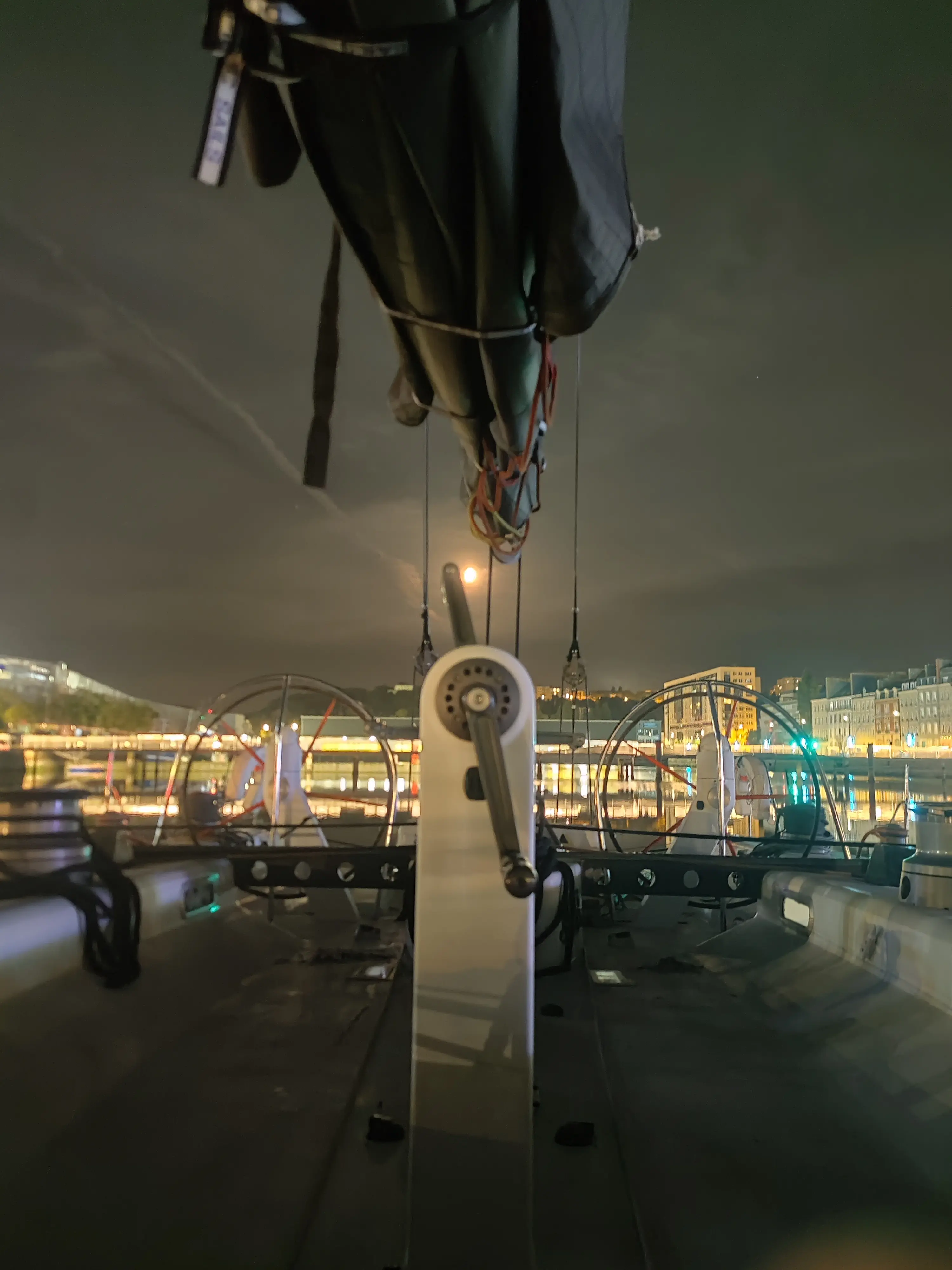
Cherbourg, France. S/V Osprey is mid-crossing. The mainsail track gate falls overboard. This is a custom part. It is specific to this vessel. Nobody stocks it. Nobody has ever stocked it. The boat cannot sail properly without it.
The Traditional Option
The local machine shop quotes over $800. The lead time is multiple weeks. They need to understand the part geometry, create tooling, set up the CNC machine, run the job, and then ship or deliver the finished piece. For a one-off custom part, every step takes time and every step costs money.
This is how marine parts have worked for decades. Something breaks, you find a shop, you wait, you pay a premium for a one-off job that the shop would rather not do because it is not worth their time compared to production runs.
The 3D Printing Option
CSM had a CAD file of the part. It went into the slicer. Material selected: ASA for UV and weather resistance. The Prusa Core One L started printing.
Eight hours later, the part was done. Checked with calipers for dimensional accuracy. Test-fitted on the track. Installed. The machine shop had not even started their quote process.
The Math
This is not a story about one part. This is the math on almost every custom marine part that vessel owners need.
Machine shops charge for setup. They charge for tooling. They charge for machine time at $30 to $150 per hour depending on the complexity. They charge minimum order fees. And they take 2 to 4 weeks because your one-off part goes to the back of the queue behind production jobs.
A 3D printer charges for material and electricity. The setup time is loading a file. The tooling cost is zero. The lead time is the print time plus shipping. For most marine hardware, that is measured in hours, not weeks.
Why This Matters for Vessel Owners
Every vessel has parts that nobody stocks. Fittings from the 1990s. Hardware from manufacturers that closed. Custom pieces that were made once for that specific hull. When these parts break, the traditional options are: find a machine shop, wait weeks, and pay a premium. Or find a similar but not identical part and make it work.
The third option did not exist until recently. Send a photo or measurements, get an exact replacement printed in marine-grade material, and have it in your hands in days instead of weeks. If the first version is not perfect, the second version costs materials only. No new setup fee. No new tooling.
The Material
The Cherbourg part was printed in ASA. This is the same material class used in automotive exterior trim. It is specifically engineered for UV resistance, weatherability, and colour retention. It does not degrade, warp, or yellow in direct sunlight. It handles salt spray without degradation.
For parts that need more strength, PETG-CF (carbon fiber reinforced) or PA-CF (carbon fiber nylon) are available. For impact resistance, polycarbonate. For flexibility, TPU. The material is chosen based on where the part lives on the vessel and what conditions it faces. Not based on what happens to be available.
What CSM Said
“If I had a 3D printer, you'd take a nap and wake up to the part done.”
Christopher Stanmore-Major. 182nd solo circumnavigator. 325,000+ nautical miles. 10-year working relationship. Now redirecting his machining budget into the 3D3D partnership.
The Cherbourg incident is the reason CSM decided to put a 3D printer on board for Newport-Bermuda 2026. If a part can be printed in 8 hours instead of waiting weeks, that changes how vessel maintenance works. It changes what is possible when you are in a port without a machine shop. It changes the economics of owning and operating a vessel.
Need a part that does not exist anymore?
Send the part number, the vessel, and the dimensions. Reply within 24 hours.
Send a Part Request